


Temporary correction of myopia using rigid contact lenses, specially designed to be worn during sleep, for clear vision during the day.
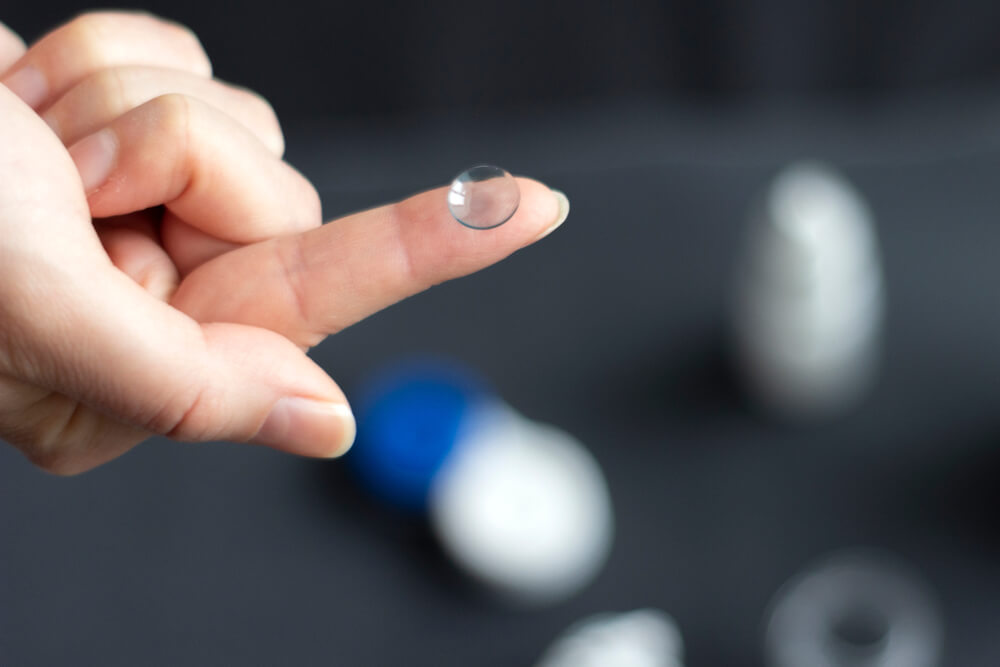
Refractive therapy, also known as orthokeratology (Ortho-K), is a method of temporary correction of myopia using rigid contact lenses, specially designed to be worn during sleep.
During the night, the lenses change, in a controlled and reversible way, the shape of the corneal surface. After they are removed in the morning, the optical effect is maintained throughout the day, allowing the patient to benefit from clear vision without wearing glasses or contact lenses during the day.
At the „Oculus Prim” Medical Center, night lens fitting is performed under a is performed under a 1-year contract. Throughout this year, the patient benefits from a program of monitoring and support included in the contract.
Orthokeratology lenses included in the contract, with a 1-year period of use.
Up to 8 free consultations during the 1-year contract period.
Training for the patient and parent on inserting, removing, and caring for the lenses.
The set needed for proper storage, cleaning, and use of the lenses.
Lens sterilization during consultations, according to the doctor’s recommendation.
At the beginning of therapy, the patient receives a bag with the products and accessories needed for proper use and care of the night lenses.
For storing the lenses when they are not being worn.
For handling and applying the lenses according to the training received.
Solution used to clean and neutralize the lenses after storage in peroxide solution.
View product →For disinfecting and storing the lenses during the day, for 6–8 hours.
View product →For ocular hydration and comfort, according to the doctor’s recommendation.
View product →A product recommended for comfort when applying the lenses, according to the doctor’s recommendation.
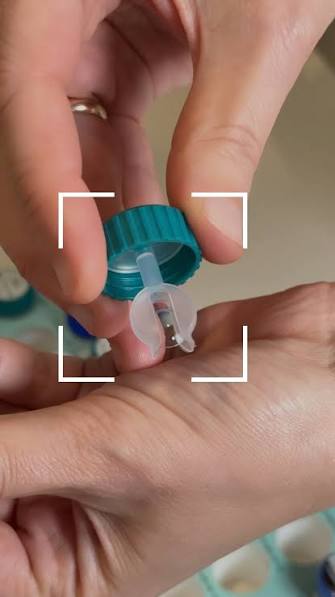

If the lens has been stored in hydrogen peroxide solution for 6–8 hours, it MUST NOT be applied directly to the eye.
The lens must never be applied to the eye if there is unneutralized peroxide. Following this sequence is mandatory for safe lens use.
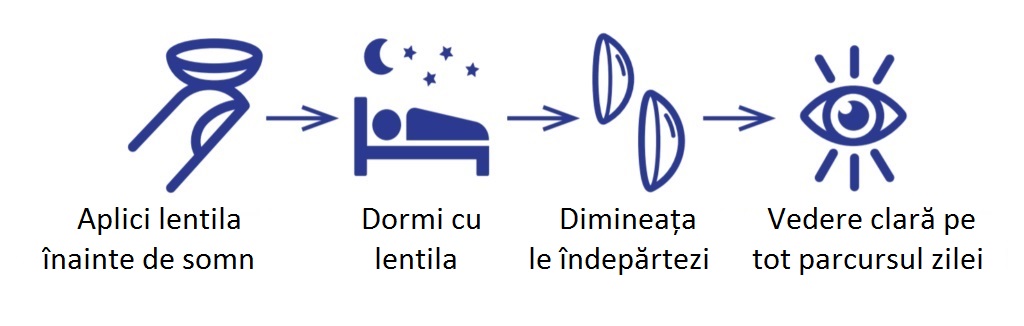
Orthokeratology lenses are rigid, oxygen-permeable lenses with a special geometry. Worn during sleep, they exert a controlled action on the corneal surface.
The lens is worn during sleep and temporarily changes the shape of the cornea.
The lens is removed, and the patient can benefit from the optical effect achieved throughout the day.
The effect is reversible and requires regular wear of the lenses to maintain the result.
In children and adolescents, orthokeratology can be used not only for temporary correction of myopia, but also as a method of myopia progression management. Studies clinical studies have shown a reduction in the rate of increase of the axial length of the eye in children using orthokeratology, although the result varies from child to child.
This method is selected individually, after an ophthalmological examination and evaluation of the cornea, refraction, ocular surface, and other relevant parameters.
The method is selected individually according to the characteristics of each child.
Orthokeratology may be considered for patients with myopia who meet the medical criteria for this method. For children, the decision is made individually based on age, refraction, corneal shape and condition, ocular surface, and other characteristics identified during examination.
Before fitting the lenses, the doctor checks whether the eye is suitable for wearing night lenses. Certain conditions of the cornea, eyelids, conjunctiva, or ocular surface may represent contraindications or may require treatment before starting orthokeratologyi.
Situations that may contraindicate or limit use include certain corneal conditions, ocular inflammation, severe dry eye syndrome, keratoconus, and other corneal changes. The final decision is made by the doctor after examination.
Orthokeratology lens fitting is an individualized process. Lens parameters are determined based on corneal measurements and ophthalmological examination results. During the fitting period, the doctor monitors lens position, corneal response, and the evolution of vision.
The necessary examinations are performed to determine whether the patient is suitable for orthokeratology and to determine the lens parameters.
The lenses are applied and their position is checked on the cornea, along with visual acuity.
The doctor monitors the eye’s response after the first night and then during the fitting period, adjusting the parameters if necessary.
After the initial fitting period, follow-up visits continue periodically to monitor the cornea and optical result.
The first visit lasts approximately 1.5–2 hours și include examinările necesare pentru evaluarea completă a ochilor and to determine whether night lenses can be fitted.
The patient returns to check lens position, corneal evaluation, and visual acuity after the first night of wear.
Lens adaptation and corneal response are evaluated. During this period, temporary fluctuations in vision, blurred vision, or other sensations may occur and should be reported to the doctor.
The doctor evaluates stabilization of the result and determines the subsequent management and interval of periodic follow-ups.
Orthokeratology requires periodic follow-up visits. During these visits, the doctor checks corneal condition, lens position and effect, visual acuity, and myopia progression.
Monitoring corneal condition and response.
Checking lens position and effect.
Evaluating visual acuity and myopia progression.
Under the annual contract, the patient receives 8 free consultations throughout one year, which allows regular monitoring and adjustment of management when necessary.
Following hygiene rules is essential for the safe use of night lenses. The child and parent are trained at the clinic in handling, cleaning, disinfecting, and storing the lenses.
Like any method involving contact lens wear, orthokeratology requires strict adherence to hygiene and medical monitoring. Wearing contact lenses overnight is associated with a risk of corneal infection, which is why follow-up visits and proper lens care are essential.
During the initial period, dryness, discomfort, visual fluctuations, or blurred vision may occur. Any pain, significant redness, increased light sensitivity, or sudden decrease in vision must be reported to the doctor immediately.
The corneal reshaping effect produced by orthokeratology lenses is temporary. After discontinuing wear, the cornea gradually returns toward its initial shape, and the corrective effect is lost. The time until refraction returns depends on the patient and the duration of treatment, so it is not appropriate to guarantee a fixed period for every person.
Night lenses do not “cure” myopia and do not guarantee stopping progression completely. Their purpose is temporary correction of myopia and, in children who are suitable for this method, slowing its progression.
The result depends on the child’s individual characteristics, adherence to the wear schedule, proper lens hygiene, and periodic medical monitoring.
Individual evaluation • Fitting • Monitoring


